Construction workers deal with demanding conditions every day. From rough surfaces and heavy equipment to dust, dirt, changing weather, and long work hours, ordinary clothing often isn’t built to handle the job.
The right construction worker uniform should be comfortable enough for all-day wear while providing durability, mobility, and practical protection. Choosing tough workwear can also help workers stay organized and visible on busy job sites.
In this guide, we’ll look at 6 durable construction worker uniform items that can make a practical addition to a construction work wardrobe.
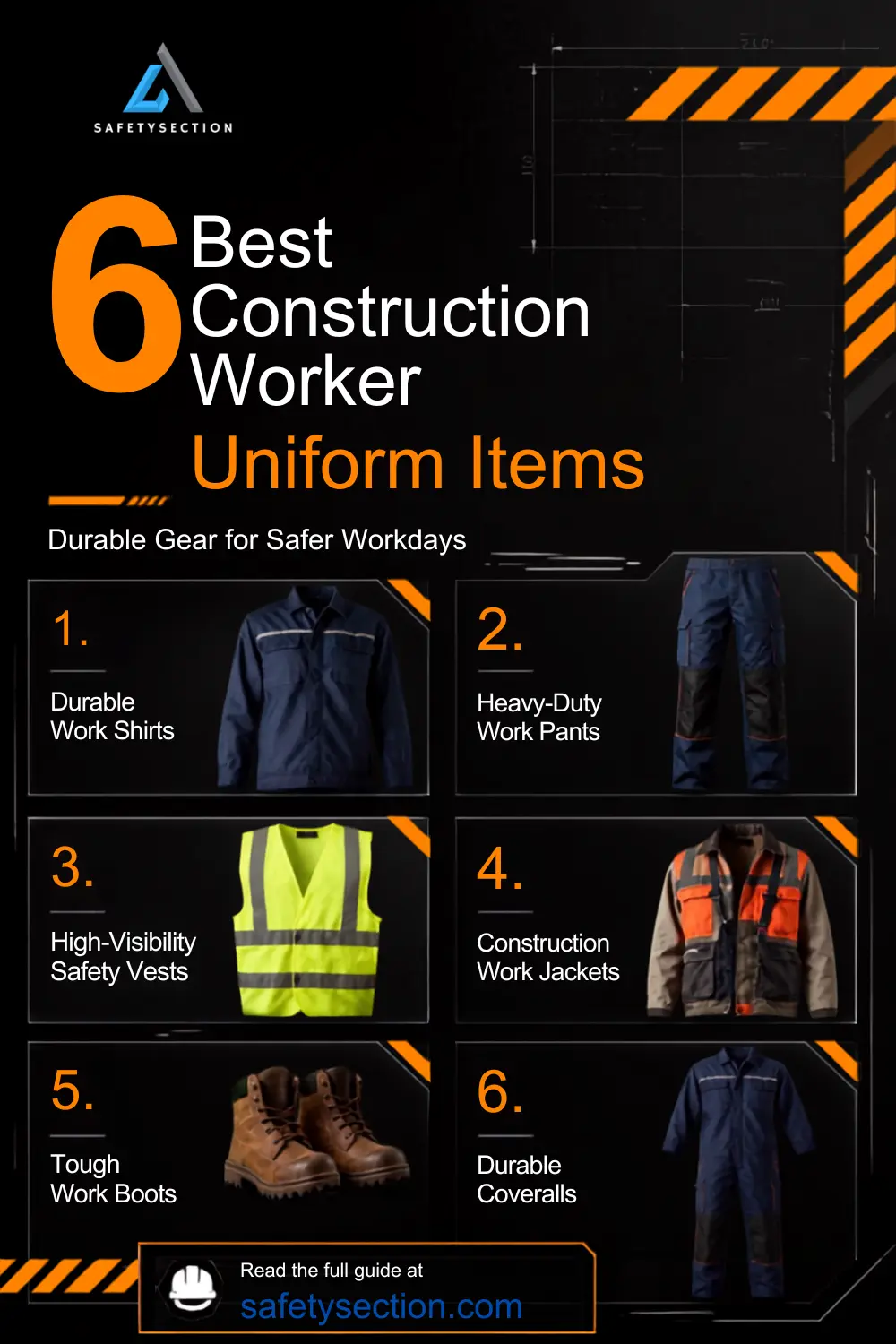
What Makes a Good Construction Worker Uniform?
Construction workwear needs to withstand regular wear and tear. Look for clothing and gear made from durable materials with reinforced stitching, functional pockets, comfortable fits, and features suited to the working environment.
Depending on the job, construction workers may also need high-visibility materials, weather-resistant fabrics, protective footwear, or flame-resistant clothing.
The right choice depends on the type of construction work, site conditions, weather, and required safety standards.
1. Durable Work Shirts

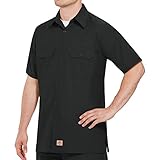

A tough work shirt is one of the most basic and useful pieces of a construction worker uniform.
Work shirts made from cotton blends, canvas, or other durable fabrics can withstand frequent washing and daily use. Long-sleeve options can also provide additional coverage from sun, dust, and minor abrasions.
For hot environments, breathable and moisture-wicking fabrics can help workers stay more comfortable. In cooler conditions, layering a durable work shirt with a jacket or sweatshirt can provide additional warmth.
Look for:
- Durable fabric
- Reinforced seams
- Comfortable fit
- Breathable or moisture-wicking material
- Chest or utility pockets
- Long- or short-sleeve options depending on the work environment
A good work shirt should allow workers to move their arms and upper body freely without feeling restrictive.
2. Heavy-Duty Work Pants


Construction workers spend much of their day bending, kneeling, climbing, walking, and working around rough materials. That’s why durable construction work pants are essential.
Heavy-duty work pants are typically made with sturdy fabrics designed to handle frequent use. Reinforced knees can be especially useful for workers who regularly kneel or work close to the ground.
Utility pockets can also make work easier by providing convenient storage for small tools, fasteners, measuring equipment, and other essentials.
Look for:
- Tough, abrasion-resistant fabric
- Reinforced stitching
- Reinforced knees
- Multiple utility pockets
- Comfortable waistband
- Gusseted or flexible construction
- Fit that allows unrestricted movement
Avoid pants that are excessively loose or have unsecured features that could become caught on equipment.
3. High-Visibility Safety Vests
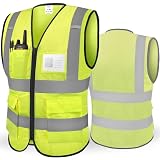


Visibility is an important consideration on many construction sites, especially where workers are around moving vehicles, cranes, forklifts, or heavy machinery.
A high-visibility construction safety vest can make workers easier to see by using bright background materials and reflective elements.
High-visibility workwear is available in different classes and designs, so employers should choose products that meet the requirements applicable to their workplace and tasks.
Look for:
- Bright high-visibility material
- Reflective strips or panels
- Durable construction
- Comfortable fit
- Secure closures
- Useful pockets
- Appropriate visibility classification for the job
A safety vest should fit properly and remain visible without interfering with movement or other required PPE.
4. Construction Work Jackets


A durable work jacket can be essential when construction workers have to work outdoors in cold, windy, or wet conditions.
Work jackets come in many styles, including insulated jackets, softshell jackets, rain jackets, and high-visibility outerwear. The best option depends on the climate and job requirements.
For colder environments, insulation can help retain body heat. In wet conditions, a water-resistant or waterproof outer layer can help keep workers dry.
Look for:
- Durable outer material
- Weather resistance
- Adequate insulation when needed
- Adjustable cuffs
- Secure pockets
- Comfortable range of motion
- High-visibility features when required
Layering can also be useful because workers can add or remove clothing as temperatures change throughout the day.
5. Tough Work Boots


Work boots are another important part of a construction worker’s uniform. Construction sites can expose workers to falling objects, sharp materials, slippery surfaces, uneven ground, and other hazards.
Depending on the work environment, workers may need safety footwear with features such as protective toe caps, slip-resistant soles, puncture resistance, electrical hazard protection, or other job-specific characteristics.
Look for:
- Appropriate protective toe protection
- Slip-resistant outsole
- Durable upper material
- Good ankle support
- Comfortable fit
- Appropriate protection for the work environment
- Compliance with applicable footwear standards
Comfort is particularly important because construction workers may spend eight or more hours on their feet.
Workers should select footwear based on the hazards present at their specific job site rather than choosing boots based solely on appearance.
6. Durable Coveralls

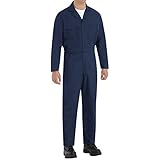

Coveralls provide full-body coverage and can be particularly useful for workers who regularly encounter dirt, dust, grease, paint, chemicals, or other workplace contaminants.
Durable coveralls are available in different materials and designs. Some are lightweight for warm environments, while insulated versions are designed for colder conditions.
Certain jobs may also require specialized protective coveralls with specific performance characteristics. Always check workplace requirements before choosing protective clothing.
Look for:
- Durable fabric
- Reinforced stress points
- Secure closures
- Multiple pockets
- Comfortable fit
- Easy cleaning and maintenance
- Appropriate protection for the job
Coveralls can also help protect regular clothing from getting heavily soiled, making them a practical option for certain construction tasks.
How to Choose the Best Construction Worker Uniform
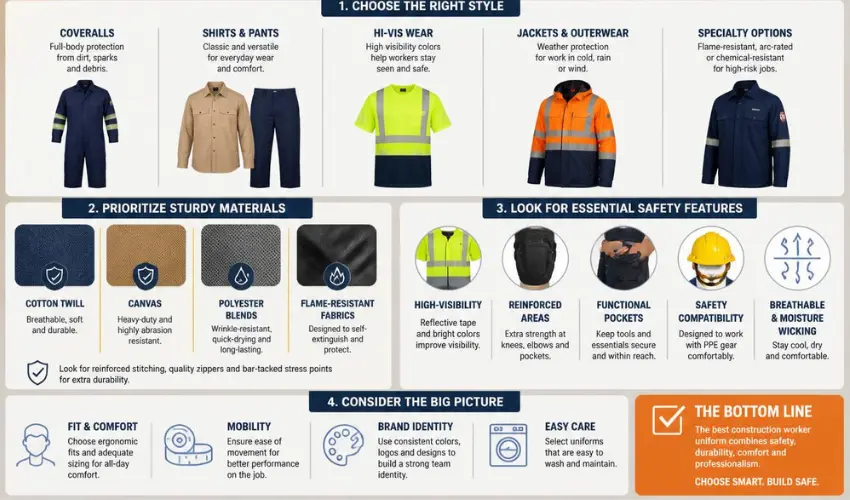
There isn’t one construction uniform that works perfectly for every job. The best workwear depends on the specific hazards and working conditions.
Consider these factors before choosing construction clothing:
Job Hazards
Start by identifying the hazards workers may encounter. These could include falling objects, sharp materials, extreme temperatures, chemicals, electrical hazards, moving vehicles, or poor visibility.
Clothing should complement, not replace, required personal protective equipment.
Durability
Construction clothing needs to withstand repeated use. Look for strong fabrics, reinforced seams, quality fasteners, and durable construction.
Comfort
Workers may wear uniforms for long shifts, so comfort matters. Choose clothing that allows bending, stretching, climbing, and other movements required by the job.
Weather
Outdoor construction workers may need different clothing throughout the year. Breathable workwear can be useful in hot conditions, while insulated and weather-resistant layers can help in cold or wet environments.
Visibility
If workers operate near vehicles or mobile equipment, visibility can be critical. Choose high-visibility clothing appropriate for the site’s requirements.
Fit
Clothing should fit securely without being excessively loose or restrictive. A proper fit can improve comfort and reduce the chance of clothing interfering with tools or equipment.
Benefits of Durable Construction Workwear
Investing in durable construction uniforms can offer several practical benefits.
Longer service life: Tough materials and reinforced construction can withstand demanding daily use.
Better comfort: Properly designed workwear allows workers to move naturally during physical tasks.
Improved organization: Utility pockets provide convenient access to small tools and work essentials.
Better weather protection: Appropriate layers can help workers remain comfortable in changing outdoor conditions.
Professional appearance: Matching, well-maintained uniforms can give a construction company a more organized and professional appearance.
Support for workplace safety: When selected correctly, specialized workwear can contribute to visibility and protection against specific workplace hazards.
Construction Worker Uniform vs. Personal Protective Equipment
It’s important to understand the difference between work uniforms and PPE.
A construction uniform generally refers to everyday work clothing, such as shirts, pants, jackets, and coveralls. PPE is equipment specifically designed to protect workers from identified hazards.
Depending on the job, required PPE may include hard hats, safety glasses, hearing protection, gloves, respiratory protection, fall protection, and safety footwear.
Work clothing should be selected alongside the site’s PPE requirements. It should not be treated as a substitute for properly rated protective equipment.
How to Maintain Construction Workwear
Even the toughest construction clothing needs proper care.
Follow the manufacturer’s washing and maintenance instructions. Inspect clothing regularly for damaged seams, worn fabric, broken closures, excessive contamination, or other problems.
High-visibility clothing should receive particular attention because dirt and wear can reduce the effectiveness of its visibility features.
Replace workwear when it can no longer provide the intended performance or when damage makes it unsuitable for the job.
Final Thoughts
The best construction worker uniform combines durability, comfort, mobility, and features suited to the job site. Durable work shirts, heavy-duty pants, high-visibility vests, work jackets, safety boots, and coveralls are six practical uniform items worth considering.
However, construction workwear should always be selected according to the hazards, weather, tasks, and safety requirements of the specific workplace. Tough clothing can improve comfort and durability, but workers should still use all required PPE and follow established safety procedures.
Choosing quality construction work clothes is a practical investment that can help workers stay comfortable, organized, and prepared for demanding job-site conditions.