Security guards play an important role in protecting people, property, businesses, and valuable assets.
Whether they work at an office building, construction site, retail store, hospital, residential property, or event venue, security guards help prevent security incidents and respond when problems occur.
Understanding security guards’ roles and responsibilities is important for employers, security professionals, and businesses that rely on security services.
While specific duties vary by location and job assignment, most security guards share several core responsibilities.
What Is a Security Guard?
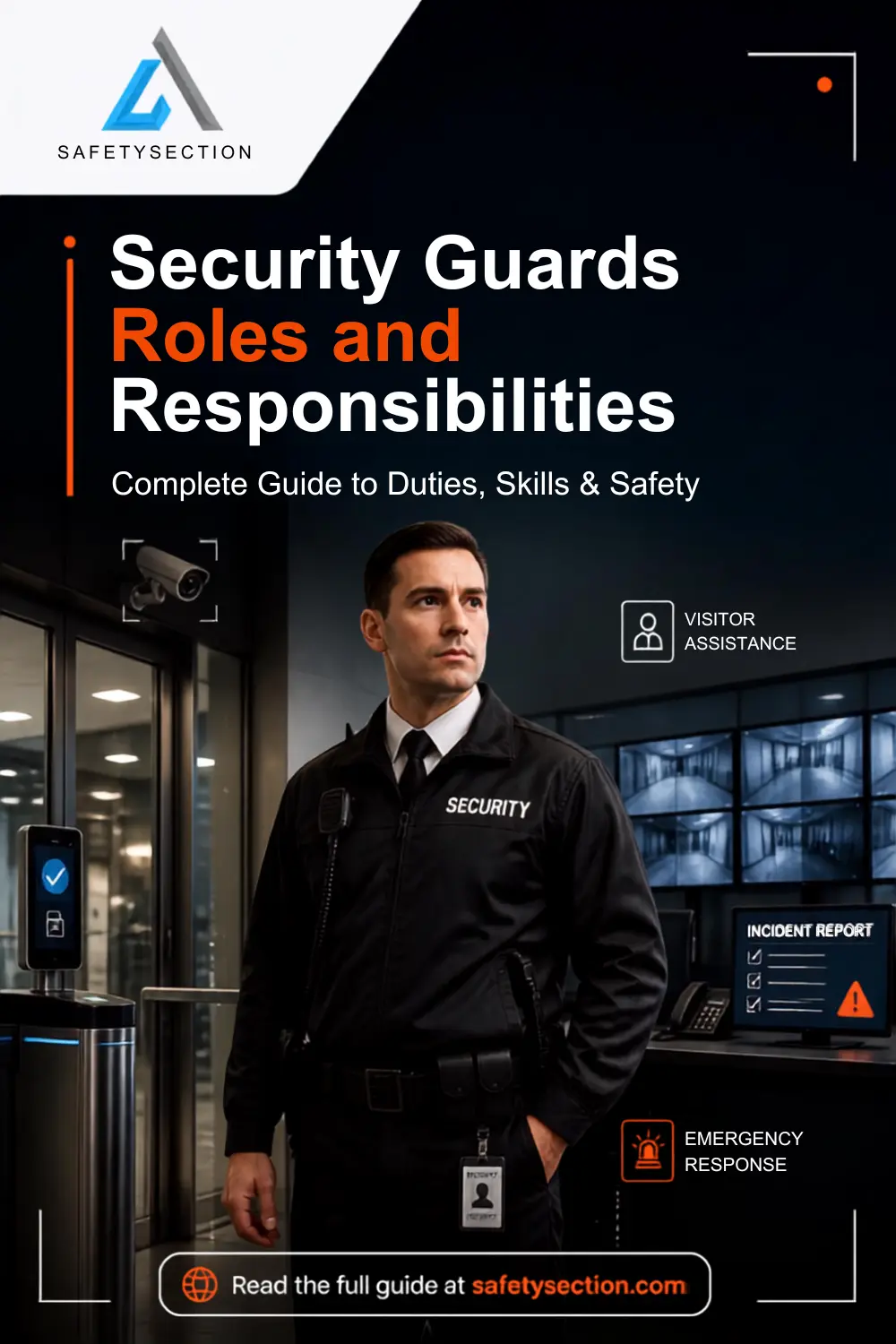
A security guard is a trained professional responsible for helping protect people and property from theft, vandalism, unauthorized access, safety hazards, and other security threats.
Security guards may work indoors or outdoors and can perform duties such as monitoring surveillance systems, controlling access, patrolling a property, checking visitors, reporting incidents, and responding to emergencies.
Their primary purpose is to deter security threats, identify potential problems, and report or respond to incidents according to their training and assigned procedures.
Main Roles and Responsibilities of Security Guards
1. Protect People and Property
One of the primary responsibilities of a security guard is protecting employees, visitors, customers, residents, equipment, buildings, and other property.
Guards maintain a visible presence and monitor the area for suspicious activity, unsafe conditions, unauthorized access, and potential threats. Their presence alone can help discourage theft, vandalism, trespassing, and other unwanted behavior.
2. Monitor Security Systems
Security guards often monitor CCTV cameras, alarms, access-control systems, communication equipment, and other security technology.
They may watch surveillance feeds for unusual activity and respond according to established procedures when an alarm or security alert occurs.
Regular monitoring can help security personnel identify problems before they become more serious.
3. Conduct Security Patrols
Patrolling is another common security guard responsibility. Guards may conduct scheduled or random patrols of buildings, parking areas, warehouses, construction sites, or other designated areas.
During patrols, they may look for:
- Unauthorized people or vehicles
- Open or damaged doors and windows
- Signs of theft or vandalism
- Fire or other safety hazards
- Suspicious activity
- Damaged security equipment
- Unusual noises or conditions
Patrols should generally be documented according to the employer’s procedures.
4. Control Access to Buildings and Facilities
Security guards may be responsible for controlling who enters or leaves a property.
Access-control duties can include checking identification, verifying visitor information, monitoring entry points, issuing visitor passes, checking credentials, and directing visitors to the appropriate area.
At restricted facilities, guards may also monitor employee access cards or other authorization systems.
The goal is to prevent unauthorized individuals from entering protected areas while maintaining an orderly entry process.
5. Prevent Theft and Unauthorized Activity
Security guards help reduce the risk of theft, vandalism, trespassing, and other unauthorized activity.
For example, a guard working at a retail location may monitor entrances and exits, while a guard at a construction site may patrol equipment storage areas and check for unauthorized access after hours.
Guards should follow their employer’s policies and local laws when dealing with suspected criminal activity.
6. Respond to Security Incidents
When a security incident occurs, guards are often among the first people expected to respond.
Depending on their training and authority, they may secure the area, notify supervisors, contact emergency services, assist people in moving to a safe location, and document what happened.
Security guards should remain calm and follow established emergency procedures rather than taking unnecessary risks.
7. Write Incident Reports

- Made in USA - Proudly produced in Ohio by a Veteran-owned business
Accurate documentation is an important part of security work.
Security guards may need to write reports about theft, accidents, property damage, suspicious activity, unauthorized access, disturbances, alarms, injuries, or other incidents.
A good security incident report should be factual, clear, and specific. It should explain what happened, when and where it happened, who was involved or present when known, and what actions were taken.
Guards should avoid exaggerating events or including unsupported assumptions.
8. Maintain a Visible Security Presence
A professional and visible security presence can discourage unwanted behavior.
Guards may be stationed at entrances, security desks, parking lots, reception areas, or other important locations. Their visibility can make employees, customers, and visitors feel safer while helping deter potential security problems.
Professional appearance and behavior are therefore important parts of a security guard’s role.
9. Assist During Emergencies
Security guards may assist with emergencies such as fires, medical incidents, severe weather, power failures, evacuations, or other unexpected events.
Their exact responsibilities depend on their training and the site’s emergency plan.
Security personnel may help direct people toward designated exits, restrict access to dangerous areas, contact emergency responders, and provide information to emergency personnel when they arrive.
Security guards should never attempt emergency tasks beyond their training or authority.
10. Enforce Site Rules and Policies
Many security guards are responsible for helping enforce the rules of the property where they work.
These rules may cover visitor access, parking, restricted areas, employee identification, deliveries, smoking, photography, after-hours access, or other site-specific requirements.
Security guards should apply rules consistently and professionally while staying within their legal authority and employer’s policies.
11. Provide Customer and Visitor Assistance
Security work is not limited to preventing crime. Guards often interact with employees, customers, contractors, residents, and visitors throughout their shifts.
They may provide directions, explain access procedures, answer basic questions, assist with visitor check-in, or direct people to the appropriate department.
Good communication and customer service skills can make security operations more effective.
12. Protect Confidential Information
Security guards may have access to sensitive information while performing their duties. This can include information about employees, visitors, security procedures, building layouts, incidents, or access systems.
Guards should follow company confidentiality policies and avoid sharing sensitive information with unauthorized individuals.
13. Maintain Security Equipment
Depending on the position, guards may be responsible for checking radios, flashlights, access-control equipment, surveillance monitors, alarms, patrol vehicles, and other security equipment.
Any damaged, missing, or malfunctioning equipment should be reported promptly so it can be repaired or replaced.
Reliable equipment is important for maintaining effective security coverage.
14. Communicate With Supervisors and Emergency Services
Clear communication is essential for security operations.
Security guards may communicate with supervisors, other guards, property managers, employees, police officers, firefighters, medical personnel, and other emergency responders.
When reporting an incident, guards should provide accurate information and follow established communication procedures.
- ALL OUR PRODUCTS ARE SHIPPED WITH "SIGNATURE REQUIRED" AT DELIVERY.

Skills Every Security Guard Should Have
Successful security guards need more than physical presence. Important skills include:
- Observation and attention to detail
- Communication
- Situational awareness
- Professionalism
- Reliability and punctuality
- Conflict management
- Report writing
- Basic emergency response knowledge
- Decision-making
- Ability to remain calm under pressure
- Knowledge of workplace security procedures
The specific training and qualifications required for security guards vary by location, employer, and assignment.
Security Guard Responsibilities During an Emergency
Emergency situations require security guards to follow established plans rather than improvise.
A typical emergency response may involve:
- Identifying or receiving information about the emergency.
- Notifying the appropriate supervisor or emergency service.
- Following the site’s emergency response plan.
- Helping keep people away from immediate hazards.
- Assisting with evacuation or access control when instructed.
- Providing relevant information to emergency responders.
- Documenting the incident after the situation is under control.
The priority should always be protecting life and avoiding unnecessary exposure to danger.
What Security Guards Should Not Do
Security guards have important responsibilities, but they do not have unlimited authority. Their powers depend on local laws, licensing requirements, employer policies, and their specific assignment.
Guards should not represent themselves as police officers, exceed their legal authority, or take unnecessary risks. They should also avoid using force except when legally permitted and consistent with their training and company procedures.
When a situation is beyond their authority or capability, contacting the appropriate emergency service or law enforcement agency is generally the safer course of action.
Difference Between Security Guards and Police Officers
Security guards and police officers both contribute to public safety, but their roles are different.
Security guards are generally hired by private organizations or individuals to protect specific people, properties, or assets. Their authority is usually limited by applicable laws and the terms of their employment.
Police officers are government law enforcement personnel with statutory powers to enforce criminal laws and maintain public order within their jurisdiction.
Understanding this distinction helps security guards perform their duties without exceeding their authority.
Why Security Guards Are Important
Effective security guards provide a combination of prevention, observation, communication, and response.
Their presence can discourage unauthorized activity, while regular patrols and monitoring can help identify potential problems. When an incident occurs, trained security personnel can follow established procedures, notify the right people, and help protect the site until additional assistance arrives.
For businesses and organizations, professional security can also support workplace safety, asset protection, emergency preparedness, and overall site management.
Conclusion
The roles and responsibilities of security guards go far beyond simply watching a property.
Security guards may protect people and assets, monitor surveillance systems, control access, conduct patrols, respond to incidents, write reports, assist during emergencies, and communicate with employees and emergency responders.
The most effective security guards understand their responsibilities, remain alert, communicate clearly, follow established procedures, and know the limits of their authority.
Proper training and a well-designed security plan are essential for helping guards perform their duties safely and professionally.