The number of fire extinguishers you need depends on the size of your building, the types of fire hazards present, the layout of your space, and the applicable fire safety regulations.
A small office may need only a few extinguishers, while a warehouse, factory, restaurant, or commercial building may require several strategically placed units.
Having the right number of fire extinguishers is essential for protecting people, property, and business operations. Too few extinguishers can leave areas unprotected, while poorly positioned units may be difficult to access during an emergency.
In this guide, we’ll explain how to determine how many fire extinguishers you need, what factors affect the quantity, and how to choose the right type for your building.
Why Is the Number of Fire Extinguishers Important?
Fire extinguishers are the first line of defense against small fires when it is safe to use them. They allow trained occupants to respond quickly before a fire spreads, provided the fire is still manageable and a safe escape route is available.
Having an adequate number of fire extinguishers helps to:
- Improve emergency response time
- Reduce the risk of fire spreading
- Protect employees, visitors, and occupants
- Reduce potential property damage
- Meet fire safety requirements
- Improve workplace fire preparedness
However, simply purchasing more extinguishers does not guarantee adequate protection. They must be suitable for the fire hazards, correctly positioned, accessible, and maintained.
How Many Fire Extinguishers Do You Need?
There is no single number that applies to every building. The required quantity is determined by several factors, including floor area, fire risk, extinguisher rating, travel distance, occupancy, and local regulations.
Here is a general guide to help understand the requirements for different types of facilities.
Building or Facility |
Fire Extinguisher Requirements |
|---|---|
Small office |
Extinguishers based on floor area, electrical equipment, and layout |
Retail shop |
Units distributed throughout sales areas, storage rooms, and other risk areas |
Restaurant |
General-purpose extinguishers plus suitable units for cooking oil and kitchen hazards |
Warehouse |
Extinguishers based on storage materials, storage height, building area, and fire risk |
Factory |
Extinguishers selected according to machinery, chemicals, electrical equipment, and production processes |
Residential building |
Extinguishers placed near kitchens, garages, and other potential fire hazards |
Workshop |
Extinguishers suitable for welding, electrical equipment, flammable liquids, and combustible materials |
This table is a general guide, not a substitute for a fire risk assessment or regulatory calculation.
5 Factors That Determine How Many Fire Extinguishers You Need
1. Building Size and Floor Area
The size of your building is one of the primary factors in determining the number of fire extinguishers required.
Larger buildings generally need more extinguishers because occupants must be able to reach suitable firefighting equipment without excessive travel distance.
For example, a 100-square-meter office may have different requirements from a 1,000-square-meter warehouse, even if both buildings have similar fire hazards.
When calculating extinguisher coverage, consider:
- Total floor area
- Number of floors
- Building layout
- Partition walls and enclosed rooms
- Corridors and access routes
- Areas with restricted access
Each floor should be assessed separately to ensure that fire extinguishers are available where needed.
2. Type of Fire Hazards
Different environments present different fire risks. The number and type of fire extinguishers required will depend on the materials and activities present.
Common fire classes include:
- Class A: Ordinary combustible materials such as wood, paper, cloth, and cardboard.
- Class B: Flammable liquids such as gasoline, solvents, paints, and oils.
- Class C: Flammable gases under classifications used in some countries.
- Class D: Combustible metals such as magnesium, sodium, and aluminum powders.
- Class E: Electrical equipment fires under classifications used in some countries.
- Class F or K: Cooking oils and fats, particularly in commercial kitchens.
Fire classifications vary by country and standard, so always check the system used in your jurisdiction.
A facility with several different fire hazards may require multiple extinguisher types rather than relying on one general-purpose unit.
3. Fire Extinguisher Rating and Capacity
Not all fire extinguishers provide the same level of protection. Their ratings indicate their firefighting capability for specific fire classes under the applicable standard.
For example, a larger or higher-rated extinguisher may provide greater protection than a smaller unit. However, the rating, quantity, and placement must still comply with local requirements.
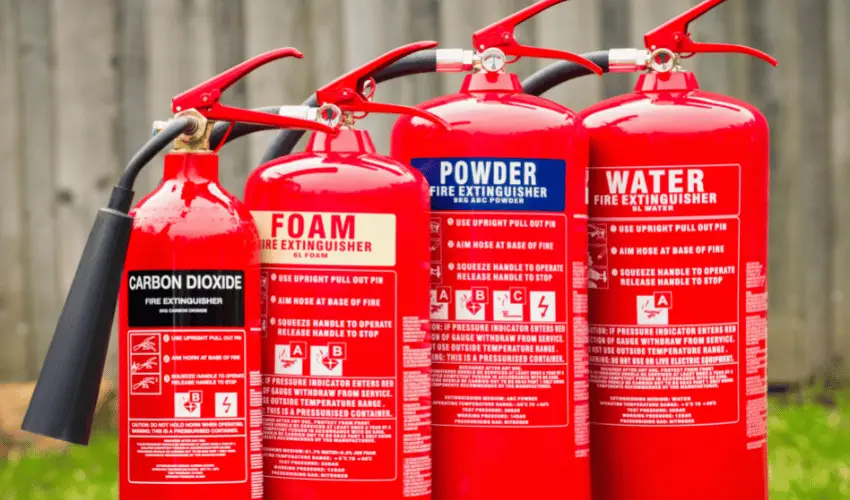
Common fire extinguisher types include:
- Water extinguishers
- Foam extinguishers
- Dry chemical powder extinguishers
- Carbon dioxide (CO₂) extinguishers
- Wet chemical extinguishers
- Specialized extinguishers for combustible metals
The correct extinguisher must be selected based on the hazard, not simply its size or weight.
4. Travel Distance and Accessibility
Fire extinguishers should be positioned so occupants can reach them quickly during an emergency.
Travel distance refers to how far a person must walk to reach an extinguisher. It is not necessarily the same as the straight-line distance between the person and the extinguisher.
Walls, doors, machinery, shelving, storage areas, and other obstacles may affect accessibility.
Consider placing extinguishers near:
- Building exits
- Stairways and escape routes
- Main corridors
- Fire-risk areas
- Electrical rooms
- Workshops
- Kitchens
- Storage areas
Extinguishers should remain visible, unobstructed, and easy to access. They should not be hidden behind furniture, stored inside locked rooms without appropriate access, or blocked by materials.
5. Local Fire Safety Regulations
Fire extinguisher requirements can vary depending on your country, local authority, building code, and industry.
Some regulations specify minimum extinguisher ratings, maximum coverage areas, travel distances, mounting requirements, and additional protection for particular hazards.
For example, commercial buildings may have different requirements from residential properties, while industrial facilities handling hazardous materials may need additional fire protection.
Before purchasing or installing extinguishers, check the applicable fire safety standards and consult a qualified fire safety professional where necessary.

- The First Alert EZ Fire Spray Portable Fire Extinguisher discharges 4 times longer than a traditional fire extinguisher, providing 32 seconds of firefighting time

How to Calculate the Number of Fire Extinguishers Needed
A basic fire extinguisher assessment involves more than dividing the building’s total floor area by a coverage figure.
Follow these steps to estimate your requirements:
Step 1: Measure the Total Floor Area
Determine the total floor area of the building and identify each floor, room, and separate section.
Large buildings should be divided into zones to make the assessment easier.
Step 2: Identify Fire Hazards
Identify combustible materials, electrical equipment, flammable liquids, cooking equipment, machinery, and other potential ignition sources.
Determine which fire classes are likely to occur in each area.
Step 3: Select Suitable Extinguisher Types
Choose extinguishers that are appropriate for the hazards in each zone.
For example, an office may need protection against ordinary combustibles and electrical equipment, while a commercial kitchen may require a wet chemical extinguisher for cooking oil and fat fires.
Step 4: Check Required Ratings and Coverage
Review the applicable fire safety standard to determine the required extinguisher rating and permitted coverage for each fire class.
Do not assume that one extinguisher covers every type of fire or that a larger extinguisher automatically eliminates the need for additional units.
Step 5: Determine Placement and Travel Distance
Map extinguisher locations to ensure occupants can reach them within the permitted travel distance.
Consider access routes, doors, obstacles, building layout, and emergency exits.
Step 6: Review the Final Requirements
Confirm the proposed quantity, extinguisher types, ratings, and locations through a fire risk assessment and applicable regulations.
This is particularly important for commercial, industrial, and high-risk facilities.
Example: How Many Fire Extinguishers Does an Office Need?
Consider a small office with several rooms, computer equipment, furniture, paper documents, and a kitchenette.
The fire hazards may include:
- Paper and furniture fires
- Electrical equipment fires
- Small cooking-related fires
The office may require a combination of suitable extinguishers positioned near exits, corridors, and the kitchenette.
A larger office with multiple floors, meeting rooms, storage areas, and separate departments will likely require more extinguishers to maintain adequate coverage and accessibility.
The final quantity should be based on the actual floor area, fire extinguisher ratings, travel distance, and local requirements.

- In case of fire, every second counts: these high-visibility fire extinguisher signs ensure quick location of extinguishers during emergencies, making them ideal for both homes and businesses, Clear pictograms guide quick equipment location during critical moments
Where Should Fire Extinguishers Be Placed?
Correct placement is just as important as the number of extinguishers installed.
Fire extinguishers should generally be positioned in visible, accessible locations where people can reach them without moving toward the fire unnecessarily.
Recommended locations include:
- Near exit doors
- Along corridors and escape routes
- Near kitchens and cooking areas
- Close to electrical rooms
- In workshops and production areas
- Near storage areas containing combustible materials
- At designated fire equipment stations
Avoid placing extinguishers directly beside a high-risk fire source if doing so could prevent occupants from safely accessing the equipment during an emergency.
Extinguishers should be mounted or supported according to the manufacturer’s instructions and applicable regulations. Their locations should also be clearly marked.
What Type of Fire Extinguisher Do I Need?
Choosing the correct fire extinguisher is essential for effective fire protection.
Extinguisher Type |
Suitable Applications |
Important Considerations |
|---|---|---|
Water |
Class A fires |
Not suitable for energized electrical equipment or flammable liquid fires |
Foam |
Certain Class A and B fires |
Not suitable for all electrical hazards |
Dry Chemical Powder |
Various fire classes depending on agent |
Can reduce visibility and leave residue |
CO₂ |
Certain electrical equipment and flammable liquid fires |
Limited cooling and potential re-ignition; dangerous in confined spaces |
Wet Chemical |
Cooking oils and fats, and some Class A hazards |
Commonly used in commercial kitchens |
Class D Specialized Agent |
Combustible metal fires |
Must match the specific metal involved |
Always check the extinguisher label and manufacturer instructions before use.
Common Mistakes When Installing Fire Extinguishers
Even when a building has enough extinguishers, incorrect installation can reduce their effectiveness.
Common mistakes include:
- Installing too few extinguishers for the building layout
- Choosing the wrong extinguisher type
- Placing extinguishers behind doors or furniture
- Blocking extinguishers with storage materials
- Ignoring upper floors or isolated work areas
- Failing to inspect and maintain equipment
- Not training employees on fire extinguisher use
- Relying on extinguishers instead of proper fire prevention measures
Regular inspections and fire safety training help ensure equipment is ready when needed.
Do Fire Extinguishers Need Regular Inspection and Maintenance?
Yes. Fire extinguishers must be inspected and maintained to ensure they remain in working condition.
Depending on local regulations and manufacturer requirements, maintenance may include:
- Routine visual inspections
- Checking pressure gauges where fitted
- Inspecting seals and safety pins
- Checking for corrosion, damage, or leakage
- Confirming the extinguisher is accessible
- Verifying labels and operating instructions
- Professional servicing at required intervals
A damaged, discharged, expired, or improperly maintained extinguisher may not operate effectively during an emergency.
Frequently Asked Questions
How many fire extinguishers do I need for a small business?
The number depends on your business premises, floor area, fire hazards, layout, extinguisher ratings, and local fire safety regulations. A small business may need several extinguishers if it has multiple rooms, floors, or high-risk areas.
How many fire extinguishers do I need per square meter?
There is no universal number of extinguishers per square meter that applies to every building. Requirements are typically based on fire class, extinguisher rating, floor area, travel distance, hazard level, and applicable regulations.
Do I need a fire extinguisher on every floor?
Many buildings require fire extinguishers on each floor, but the exact quantity and placement depend on the building type, layout, local regulations, and fire risk assessment.
Do I need different fire extinguishers for different areas?
Yes. Different areas may have different fire hazards. A kitchen, electrical room, warehouse, and workshop may require different extinguisher types to provide appropriate protection.
Can one fire extinguisher cover an entire building?
Sometimes a small building may be adequately protected with a limited number of extinguishers, but larger buildings or buildings with multiple fire hazards generally require several units strategically positioned throughout the premises.
How often should fire extinguishers be inspected?
Fire extinguishers should be visually checked regularly and professionally maintained according to local regulations, applicable standards, and manufacturer instructions.
Are more fire extinguishers always better?
Not necessarily. Having more extinguishers does not guarantee better protection if they are unsuitable for the hazards, inaccessible, poorly maintained, or incorrectly positioned. Proper selection, placement, and maintenance are equally important.
Conclusion
Determining how many fire extinguishers you need requires careful consideration of your building size, fire hazards, extinguisher ratings, accessibility, and local fire safety regulations.
The goal is to ensure that suitable fire extinguishers are available throughout the premises, allowing occupants to respond quickly to a small fire when it is safe to do so.
For homes, offices, shops, warehouses, factories, and commercial facilities, a proper fire risk assessment is the best way to determine the correct quantity and placement of fire extinguishers.
Remember, fire extinguishers are only one part of an effective fire protection system. Fire alarms, emergency exits, evacuation procedures, employee training, and regular maintenance are equally important for keeping people safe.