If you work in construction or any industry that involves working at heights, having the right safety gear is crucial, and a safety harness is one of the most essential pieces of equipment you’ll need.
It plays a vital role in protecting you from falls and serious injuries when working at heights above ground level.
In hazardous environments, a high-quality safety harness provides maximum protection.
Whether you’re in construction, welding, climbing, oil and gas, or confined space operations, using a safety harness isn’t just a recommendation, it’s a necessity.
During a hunting trip, especially when climbing or sitting in a tree, safety becomes a major concern. Tree branches can be narrow and unstable, and one wrong move can lead to a serious fall, resulting in injury or even death.
A safety harness is your first line of defense against falls.
It securely supports your body and prevents you from hitting the ground if you slip or lose balance.
Using a harness not only keeps you safe but also gives you the freedom to use both hands while perched at height—whether you’re setting up gear, aiming, or simply adjusting your position.
If you’re unfamiliar with this kind of protective gear, don’t worry, our detailed reviews and comprehensive buying guide will walk you through everything you need to know.
Best Safety Harness Comparison Table
Best Safety Harness
FRONTLINE FALL PROTECTION Safety Harness

- Back, shoulder and waist pads are of moisture wicking material for better breathability and a more comfortable fit to help reduce user fatigue and heat exhaustion
KwikSafety (Charlotte, NC) 2 PACK HURRICANE Safety Harness
![KwikSafety HURRICANE Safety Harness [1PK] ANSI OSHA Fall Protection Gear | ANSI, OSHA Compliant, 3 D-Ring, Fall Protection, Construction, Roofing, Industrial, Scaffolding, Contractor](https://m.media-amazon.com/images/I/51Mw82l0qLL._SL160_.jpg)
- 3 HEAVY DUTY D-RINGS | CUSHIONED BACK SUPPORT - The KwikSafety HURRICANE is a premium, durable, high performance full body harness that meets & exceeds ANSI/ASSE Z359.11-2021 standards. Our safety harness fall protection features: (2) hip d-rings & (1) dorsal d-ring for primary fall arrest attachment, travel restraint & rescue. (1) cushioned back support pad, (4) pass-through buckles to ensure proper fit, & premium stitched load bearing straps made from pure, non-recycled synthetic material.
The KwikSafety HURRICANE Full Body Safety Harness is a dependable and affordable fall protection harness designed for construction, roofing, window cleaning, and other elevated work.
Tested to meet ANSI/ASSE Z359.11-2021 standards and fully OSHA compliant, it delivers reliable protection while offering features typically found on more expensive models.
Constructed from high-strength polyester webbing, the harness includes three heavy-duty D-rings—one dorsal D-ring for fall arrest and two hip D-rings for positioning and restraint.
A cushioned back support pad improves comfort during long workdays, while four adjustable pass-through buckles allow users to achieve a secure, customized fit. The harness accommodates a wide range of body sizes, making it suitable for both men and women.
Designed for durability and everyday use, the KwikSafety HURRICANE offers an excellent balance of comfort, safety, and value.
While it lacks the lightweight aluminum hardware found on premium harnesses, it remains an outstanding choice for professionals seeking reliable fall protection at a more affordable price.
Pros
- OSHA compliant and ANSI/ASSE Z359.11-2021 tested
- Three heavy-duty D-rings for versatile fall protection
- Cushioned back support enhances comfort
- Durable 100% polyester load-bearing straps
- Fully adjustable for a secure fit
- Excellent value for professional use
Cons
- Heavier than aluminum-frame harnesses
- Pass-through buckles take longer to adjust than quick-connect buckles
TT TRSMIMA Safety Harness Fall Protection Kit

- DATA:PLEASE READ BEFORE PURCHASING. Size(Including buckle)! Waist 30.7-51inch, Chest: 31.5-47.3inch, Leg: 19.6-39inch, fit weigh 130-310 pounds. Best for medium to large body, designed for construction & roofing work,not for rock climbing or hiking.

Hammerhead 5pt Safety Harness

- 🧰 RELIABLE PROTECTION AND SUPPORT: The Palmer Safety 5 point adjustment harness offers superior protection and support for workers in a range of industries, with a customized fit for maximum comfort and safety, and sturdy buckles and straps that can be easily adjusted to fit a range of users.
The Hammerhead 5-Point Safety Harness is a professional-grade fall protection harness built for demanding jobs in construction, roofing, utilities, and industrial work.
Featuring five adjustment points, quick-connect chest buckles, tongue buckle leg straps, and both back and side D-rings, it provides a secure, customized fit while allowing workers to move comfortably throughout the day.
The thick padded back support with a removable tool belt helps distribute weight evenly and reduces fatigue during extended use. The high-strength steel D-rings support users from 130 to 420 pounds, making the harness suitable for a wide range of workers.
Built-in fall indicators add an extra layer of safety by making it easy to determine if the harness has been subjected to a fall. Meeting ANSI Z359.11-2014 and A10.32-2012 standards, this harness delivers the durability and reliability professionals expect.
Pros
- Five-point adjustable design for a secure, customized fit
- Padded back support with removable tool belt for added comfort
- High-strength steel back and side D-rings
- Quick-connect chest buckle allows fast and easy donning
- Built-in fall indicators enhance workplace safety
- Meets ANSI Z359.11-2014 and A10.32-2012 standards
Cons
- Heavier than basic entry-level safety harnesses
- Higher price than budget alternatives, but justified by its premium features
MUDDY Tree Stand Safety Harness
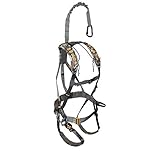
- Tree Safety Harness: Have a comfortable, concealed, and safe hunt in your deer stand with this tree climbing harness built to keep any hunter out of their target’s sight
The Muddy Hunting Tree Stand Safety Harness is designed specifically for hunters who want dependable fall protection without sacrificing comfort or mobility.
Built from lightweight padded nylon, this harness weighs just 1.9 pounds while supporting users up to 300 pounds, making it ideal for long days in a tree stand.
The Optifade Elevated II camouflage pattern helps hunters stay concealed, while the one-hand quick-set carabiner allows for fast and secure attachment, even when carrying a firearm or other gear.
Comfort is another highlight, thanks to the padded design and integrated suspension relief strap pocket, which improves safety in the event of a fall.
The durable construction and user-friendly design make this harness a reliable choice for deer hunting and other elevated hunting applications.
Pros
- Lightweight padded design for all-day comfort
- Optifade Elevated II camouflage helps with concealment
- One-hand quick-set carabiner for easy attachment
- Supports up to 300 pounds
- Includes suspension relief strap pocket for added safety
Cons
- Designed specifically for hunting rather than industrial fall protection
- Higher price than basic hunting safety harnesses
What is a Safety Harness?

How does a Safety Harness Work?

Various Types Of Safety Harnesses
Buying Guide
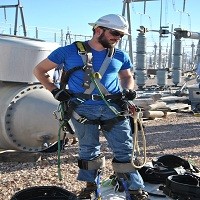
Whether you’re working in construction, roofing, tower climbing, or hunting from a tree stand, a quality safety harness is your first line of defense against dangerous falls.
Choosing the right one involves more than picking a random model—it requires understanding key features, safety standards, and use-case specifics.
Understand the Purpose and Application
Before buying, identify the type of activity or job the harness is needed for. Harnesses are generally classified into the following use-cases:
-
Construction work (general fall protection)
-
Tower or pole climbing
-
Roofing
-
Tree stand hunting
-
Oil and gas rigs
-
Confined spaces and rescue work
-
Rigging or suspension work
Each of these scenarios may require different harness configurations and features (e.g., dorsal D-rings, side D-rings, or additional padding).
Know the Types of Safety Harnesses
-
2-Point Harness: Basic fall arrest with dorsal and sternal D-rings.
-
4-Point Harness: Includes side D-rings for work positioning.
-
5-Point Harness: Adds a ventral ring for suspension and climbing.
-
Vest-Type Harness: Easy to wear and ideal for general use or hunting.
-
Rescue or Parachute Harness: Designed for controlled descent and retrieval.
Fit and Adjustability
An improperly fitted harness is dangerous. Choose one with:
-
Adjustable leg, shoulder, and chest straps
-
Easy-to-use buckles (quick-connect or pass-through)
-
Size options for different body types (S, M, L, XL, etc.)
-
Weight capacity, usually ranging from 130 to 310 lbs
Always try the harness on if possible or follow sizing charts carefully.
Key Safety Features to Look For
-
D-Rings: Look for durable, rust-resistant rings positioned on the back, sides, and chest as needed.
-
Impact Indicators: These show whether the harness has been involved in a fall.
-
Lanyard Keepers: Keep lanyards neatly stored and reduce tripping.
-
Suspension Trauma Straps: Provide leg support after a fall to prevent circulation issues.
-
Tool Rings/Loops: For conveniently attaching tools.
-
Padded Shoulder, Waist, or Leg Straps: Increase comfort during prolonged use.
Material and Build Quality
Choose a harness made from high-strength synthetic materials like:
-
Polyester or nylon webbing – durable, abrasion-resistant, and lightweight.
-
Metal hardware – look for stainless steel or zinc-plated buckles and D-rings.
-
Heat and UV resistance – especially if working outdoors frequently.
Standards and Certification
Make sure your harness meets industry safety standards:
-
ANSI Z359.11 (U.S. standard for full-body harnesses)
-
OSHA compliant (Occupational Safety and Health Administration)
-
CSA Z259.10 (Canada)
-
EN361 (Europe)
Certifications ensure the harness has passed fall arrest and durability tests.
Maintenance and Inspection
Check that your harness is:
-
Easy to clean (wipe with mild soap and water)
-
Equipped with protected labels (so they don’t wear off over time)
-
Stored properly (away from chemicals, heat, and UV light)
-
Inspected regularly for frayed straps, rusted metal parts, or signs of wear
Replace harnesses that have been involved in a fall or show signs of damage.
Budget Considerations
You don’t want to skimp on safety, but you also don’t have to overspend. Consider:
-
Basic models: ~$50–$100 (good for occasional use or light duty)
-
Mid-range harnesses: ~$100–$200 (durable enough for daily use)
-
Premium harnesses: $200+ (heavy-duty work, long shifts, added comfort)
Bonus Features (Optional but Helpful)
-
Reflective stitching for low-light work
-
Breathable mesh lining for hot weather
-
Lightweight design for increased mobility
-
Carrying bag or storage case
Final Tip: Match the Harness to the Job
Don’t buy a climbing harness for roofing, or a hunting harness for rigging. Always choose a harness specifically designed for the type of work you’ll be doing.
Bottom Line
Safety should always be the top priority when working, especially in environments where falls are a risk. Accidents can happen unexpectedly, and a fall from any height can lead to serious injury or even death. That’s why it’s crucial to equip yourself with reliable protective gear.
At SafetySection.com, we’re dedicated to helping you find the best safety equipment available. Explore our in-depth reviews, expert insights, and comprehensive buying guide to choose the right safety harness for your needs. Stay informed. Stay protected.
 Frequently Asked Questions
1. What is the purpose of a safety harness?
Answer:
A safety harness is designed to protect a person from injury or death in the event of a fall. It works by distributing the forces of a fall across the body’s strongest areas, typically the thighs, chest, and shoulders—and prevents the user from hitting the ground. It’s an essential piece of personal protective equipment (PPE) for anyone working at heights, such as in construction, roofing, tower climbing, or tree stand hunting.
2. How do I properly wear a safety harness?
Answer:
To properly wear a safety harness:
-
Step into the leg loops and pull the harness over your shoulders.
-
Adjust the shoulder straps so they’re snug but not restrictive.
-
Fasten the chest strap across your chest at mid-sternum level.
-
Secure the leg straps tightly but comfortably around your thighs.
-
Make sure the D-ring (usually on the back) is centered between your shoulder blades.
Always perform a visual and tactile check to ensure there are no twists, loose ends, or frayed areas before use.
3. How often should a safety harness be inspected?
Answer:
Safety harnesses should be:
-
Visually inspected before every use by the user.
-
Formally inspected at least once a year by a qualified professional.
Look for fraying, cuts, burns, UV damage, rusted hardware, missing stitching, or any signs of wear and tear. If the harness has been involved in a fall, it must be removed from service immediately.
4. What is the lifespan of a safety harness?
Answer:
Most manufacturers recommend replacing a harness every 5 years, even if it appears undamaged. However, this depends on:
-
Frequency of use
-
Exposure to harsh environments (sun, chemicals, water, etc.)
-
Manufacturer guidelines
Always follow the product’s user manual and label for specific expiration or retirement dates.
5. Can I use a safety harness alone, or do I need other equipment?
Answer:
A safety harness is just one part of a complete fall arrest system. To ensure full protection, you’ll also need:
-
A secure anchorage point (rated for fall arrest)
-
A connecting device (such as a lanyard or self-retracting lifeline)
-
Possibly a harness with positioning or suspension features, depending on the job
All components should meet ANSI or OSHA safety standards and be compatible with one another.
Related Resources:
- Why You Need a Safety Vest with Lights and Where to Use It
- Top 5 Full Brim Hard Hats for Construction and Landscaping
- 6 Best Construction Worker Uniform Items That Are Durable & Tough
- Protective Industrial Products: Everything You Need To Know
- 10 Common Construction Hazards and How to Prevent Them